The initiative was conducted in partnership with the Government of Saint Lucia, the United Nations Population Fund (UNFPA), UN Women, and the Government of Canada.
The Ministry of Health, Wellness and Nutrition recently hosted a three-day 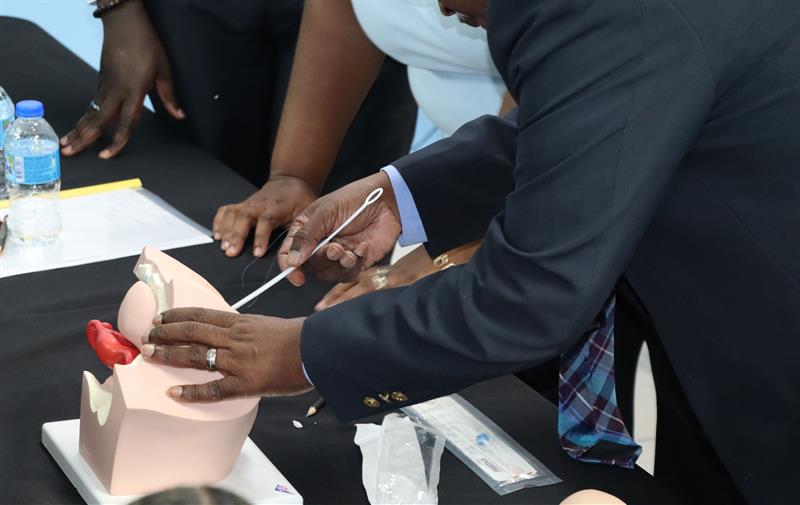 refresher training focused on Long-Acting Reversible Contraceptives (LARCs), aimed at strengthening reproductive health services and expanding access to modern family planning options across the island. The training, was held from April 20 to 23, 2026, and brought together healthcare providers from various health facilities to build capacity, in an effort to improve service delivery and ensure that clients receive high-quality, rights-based reproductive healthcare.
The initiative was conducted in partnership with the Government of Saint Lucia, the United Nations Population Fund (UNFPA), UN Women, and the Government of Canada. This refresher builds on initial training conducted in 2024 across four OECS countries, including Saint Lucia.
Speaking on the objectives of the refresher programme, the Lead Facilitator of the LARCs Refresher Training Dr. Victor Wheeler explained that the training is designed not only to sharpen clinical skills, but also to strengthen counselling and client education. “We go through counseling for patients and also counseling of side effects, everything they need to do, and alternatives. We also will be going through some myths associated with the implants and the IUDs, things that can discourage persons from having the methods. The main thing we are stressing today is the benefits of the implant and the IUD, which is long-acting, between three to five years. Once the person has it, they don't have to worry about getting medication or spending money. Part of today's session would be a demonstration on practical. We have arms that we teach the members of staff here how to introduce it, to make sure they have the technique proper. And tomorrow and Wednesday, we'll actually have patients where we will be inserting both the implant and the IUD after proper counseling.”
Michael Atim the Sexual Reproductive Health Specialist with the United Nations Population Fund took the opportunity to reassure the public about the effectiveness of LARCs and the readiness of trained healthcare providers to deliver these services. “First of all, I would really want the general community to know that LARCs are very effective, they're very reliable, but also having the health workers sort of refresh their skills means that they're better able to serve the community and better able to provide them with quality services. So, the community should rest assured that when they need the contraceptives, the health workers at the facilities will be able to provide the contraceptives to them.”
One client shared her experience after receiving the contraceptive implant. “It wasn't a bad experience. You might feel a little discomfort in getting the numbing process, but after the numbing process, you don't feel anything. Maybe the nurse will be asking you if you're okay, are you feeling any pain but you don't feel any pain after the numbness. It's a simple procedure, 15 minutes, maybe less than that, and you're good after.”
The St. Lucia LARCs Refresher Training represents a significant investment in the island's reproductive healthcare workforce. It also forms part of a broader strategy to improve maternal and reproductive health outcomes across the Eastern Caribbean.